How a war in the Middle East turned off stoves in Bengaluru — and what the people who cook for a living did next
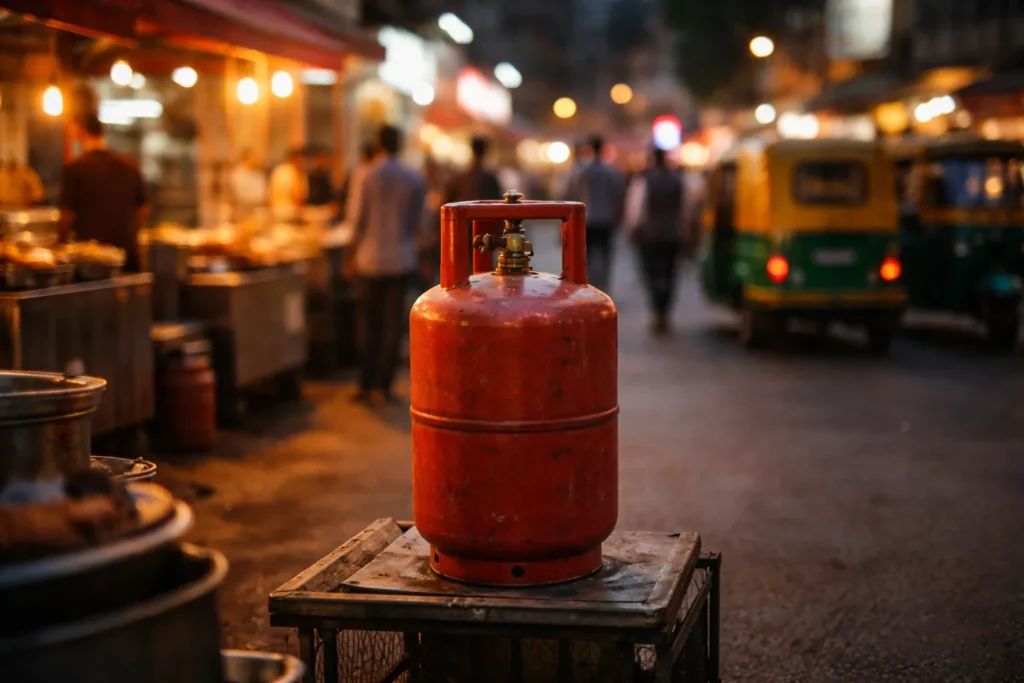
For most people in Bengaluru, the Strait of Hormuz is just a name on a map: a thin sliver of water between Iran and Oman. But in the first week of March 2026, that narrow channel became the invisible hand that turned off their stoves.
The US‑ and Israeli‑led campaign against Iran, and Tehran’s counter‑strikes, disrupted shipping through the Strait — the corridor through which India receives the vast majority of its LPG imports. India imports about 60% of the LPG it consumes; roughly 85–90% of those imports pass through that same 33‑nautical‑mile‑wide corridor. When the Strait went dark, the first thing to go dark was the flame in kitchens that depend entirely on a small, 19‑kg cylinder.
The Darshanis and the Shutdown Warning
By March 8–9, hotel associations in Bengaluru had already warned that eateries across the city would likely shut down from March 10 onward, as commercial LPG cylinders stopped arriving. The problem was not that every kitchen had run out at once; it was that refill bookings were stalling, and many hotels and restaurants had no stock.
On March 12, Ananth Narayan, Bengaluru chapter head of the National Restaurant Association of India, told reporters that at least 100 restaurants in the city had completely run out of cylinders. The remaining kitchens were rationing gas, choosing which dishes to cook and which to drop.
Who Gets the Cylinder?
The government’s response was clear and hard‑edged: it prioritised domestic LPG over commercial supply. The Oil Ministry and state‑level agencies publicly indicated that household refills would be protected, while commercial allocations were cut or delayed. For hotels and restaurants, this meant you were no longer on the priority list.
Vijay K. Shetty, president of the Indian Hotel & Restaurant Association (AHAR), told reporters that about 20% of hotels in his network had already shut down due to the shortage, with another 50–60 expected to close within two to three days. “People rely on us for daily meals,” he said, describing the crisis as a serious threat to livelihoods and to the city’s basic food‑service infrastructure.
The PG Mess and the Two‑Meal Menu
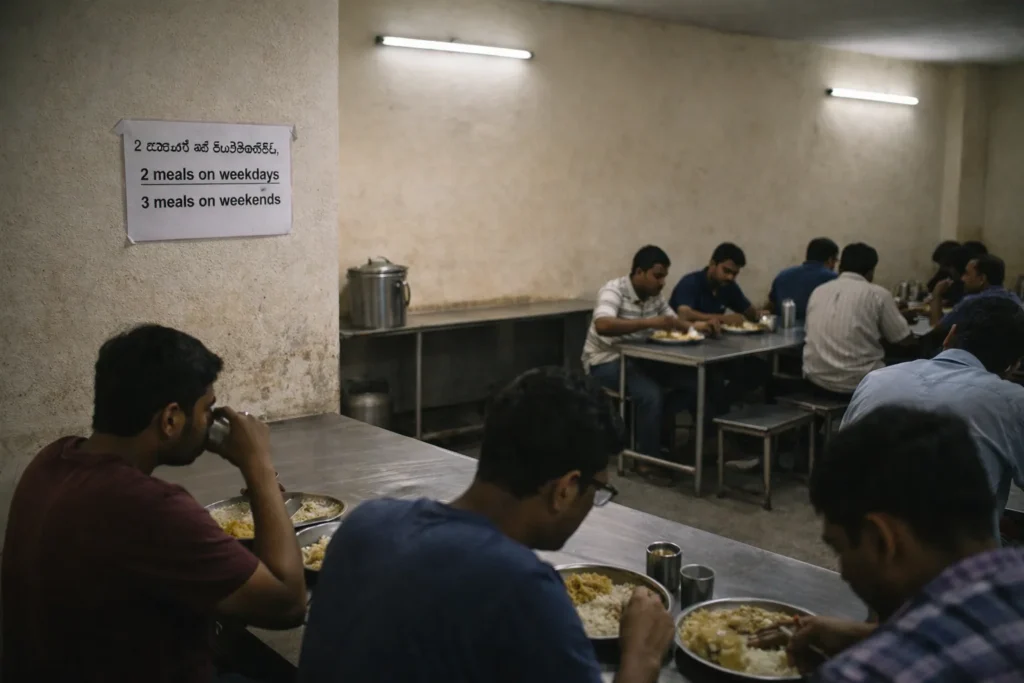
The crunch hit hardest where margins are paper‑thin. In Bengaluru and other cities, PG accommodations — the informal but essential feeding system for students, migrants, and low‑income workers — began cutting food. Many PGs limited residents to two meals on weekdays and three on weekends.
For residents who depend on PG kitchens as their only hot meal, the reduction meant skipping main‑course dishes or eating cut‑price portions. The PG harvest was not a policy choice in the abstract; it was a laptop worker deciding whether to cook at home or eat outside, and a PG owner deciding whether to lose money or turn people away.
Wood Fire and Induction in Bengaluru Kitchens
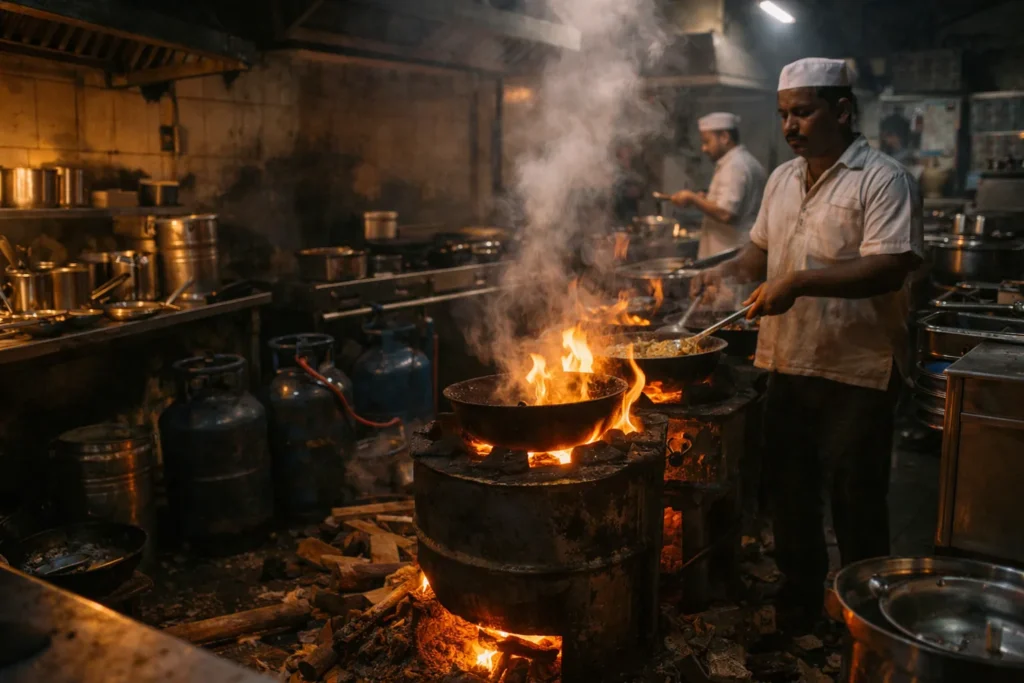
In the absence of cylinders, some commercial kitchens resorted to the oldest technology of all: firewood. In Bengaluru and other affected cities, reports described chefs burning scrap wood and lumber to keep rice and dal on the stove. This was not a niche experiment; it was emergency triage in 2026, as professional cooks went back to wood‑fire cooking because a conflict 3,000 km away had shut a sea lane.
Others pivoted to induction. Cloud kitchens, restaurant chains, and midsize hotels began installing or expanding induction‑based systems, but the transition was neither quick nor cheap. Induction requires rewiring, new cookware, and upfront capital that many small operators do not have. For many, the gap between “no LPG” and “fully on induction” was still a gap one could fall through.
The Hotels’ Letter to the Prime Minister
By March 20, Bengaluru hotel associations had written formally to Prime Minister Narendra Modi, warning that the LPG shortage was causing “severe disruptions to operations and rising costs”. They described delayed food preparation, limited menus, and reduced service efficiency during peak hours. Banquets and event catering — where consistent fuel supply is non‑negotiable — were among the hardest hit.
The associations asked the government to stabilise supply and control prices, arguing that passing on sharply higher LPG costs to customers would push demand down just when the sector was already reeling. The government, meanwhile, had already set up a three‑member committee of executive directors from Oil Marketing Companies to review demands for LPG supply to restaurants, hotels, and other industries.
At the refinery level, public‑sector units were directed to cut petrochemical‑stream output and maximise LPG production. The national LPG refill‑booking cycle was extended from 21 days to 25 days to discourage hoarding.
The Tankers and the Uneven Recovery
By mid‑March, Indian officials reported that two Indian‑flagged LPG tankers — in total carrying around 86,500 metric tonnes of gas — had secured passage through the Strait after diplomatic talks with Tehran. Media and logistics‑sector reports noted that this eased supply in some cities and allowed partial normalisation.
However, even as late as late March, coverage from Bengaluru and other metros indicated that many smaller hotels and restaurants continued to receive little or no commercial LPG, despite government orders to restore at least 50% of pre‑crisis allocations to food‑service sectors. The recovery was real, but it was uneven: big chains with direct contracts got cylinders first; the darshinis and budget hotels waited longer.
What “75% on LPG” Actually Means
India consumes about 31 million tonnes of LPG every year, roughly 30–31 million tonnes. Of that, about 60% is imported and 40% is domestically produced. Within that ecosystem, industry‑focused reporting on the crisis notes that about 75% of restaurants in India rely on LPG, while the rest use piped gas or other fuels.
That 75% is not a background statistic; it is the structural vulnerability baked into the economics of feeding a billion people affordably. LPG is cheap, portable, and easy to deploy. Every alternative — piped gas, induction, biogas — requires more infrastructure and more money than many small operators can afford overnight.
The Cold Idli
The Strait of Hormuz is about 33 nautical miles wide — roughly 60 kilometres of chokepoint between geopolitics and your plate. The war there is fought with drones, missiles, and naval escorts. But in Bengaluru it is felt in very different units: the number of days a household skipped cooking, the number of dishes a PG scrapped from the menu, the number of restaurants that simply did not reopen after March 10.
The household that ate cold food for three days. The PG cook who halved the menu. The banquet hall that cancelled the wedding reception. The cloud kitchen that filed an insurance claim for spoiled stock. These are not footnotes to a geopolitical story. They are the story.
The Strait of Hormuz is an abstraction. The cold idli, the uncooked rice, and the darkened kitchen are not.