When you sell an old gadget online, you expect simple negotiations, a quick test, and a straightforward payment. Fraud networks use that expectation against you.
A real attempt to buy a budget smartphone for Rs. 3,500 exposed every operational trick that classifieds scammers deploy. Understanding how these operations work will help you identify fraudsters quickly and protect your personal safety.
Anatomy of the Setup
The scam began on OLX with a listing for an entry-level Redmi 9A. The listed price was Rs. 4,999. Within minutes, a user reached out.
Three immediate details appeared odd:
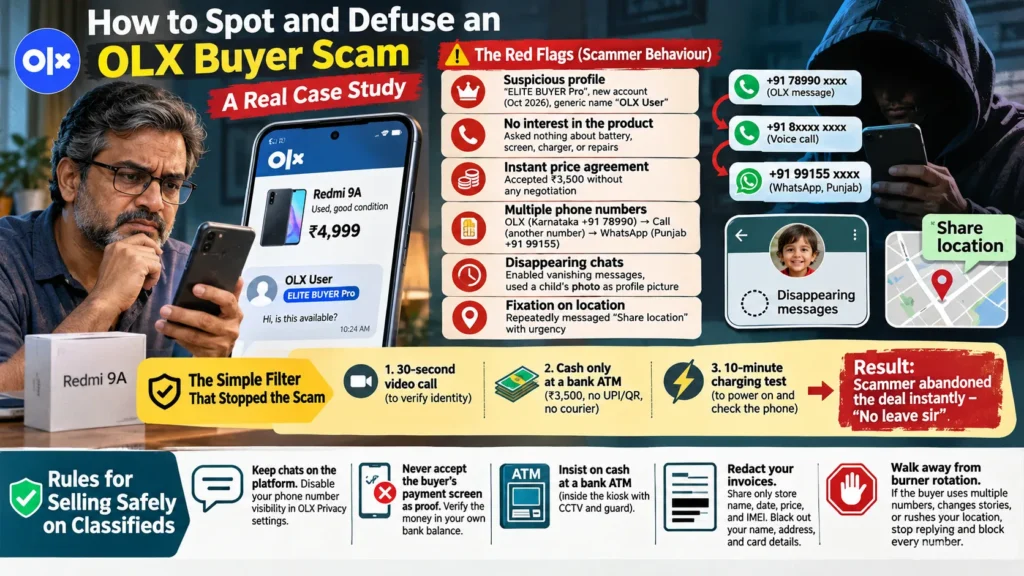
The Olx Elite contact: The buyer’s profile image contained a blue banner reading “ELITE BUYER Pro”. OLX has such buyer rating tier that allows them to call you even if you haven’t given your phone number. You just get a message that a person from this number will call you. The scammer had opened an OLX account in Oct 2026 itself, and his account name remained the blank default “OLX User”.
Zero interest in the hardware: Most buyers purchasing a used phone ask about battery health, screen cracks, chargers, or repairs. This person asked nothing.
Instant price agreement: When offered the device at Rs. 3,500, he accepted on the spot. Fraudsters do not negotiate because they never intend to pay real money.
The Operational Red Flags
Once communication started, the buyer moved through a series of tactical deceptions:
1. Burner SIM Rotation
The caller never used one identity. He initiated contact through an OLX message with a Karnataka number (+91 78990). He called from a second number. He then initiated a WhatsApp chat using a third number with a Punjab area code (+91 99155). When asked why his numbers kept changing, he claimed each line belonged to a different friend.
Scam networks swap SIM cards constantly because victims report fraudulent numbers to Truecaller and the national cybercrime portal (1930), leading to swift carrier bans.
2. Disappearing Chat Traces
On WhatsApp, the contact enabled disappearing messages. He hid his online activity and set his profile picture to a photo of a young child. Fraud operations frequently use pictures of children or family portraits to look harmless, while timer-based message deletion removes records of their threats or fake payment proofs.
3. Fixation on Physical Location
The buyer repeatedly messaged two words: “Share location”. He showed intense urgency to get an office or residential address on a Sunday morning. Scammers want your home address for two reasons: either to pressure you in person with short payments and intimidation, or to anchor a spot where they can dispatch a third-party courier while sending a fake payment SMS.
The Filter That Broke the Script
You do not need to argue with a suspected scammer. You only need to apply friction. Scammers run high-volume scripts; the moment an interaction requires real verification and effort, the scheme falls apart.
Three conditions ended this scam attempt immediately:
A mandatory 30-second video call: Demanding a quick video check on WhatsApp to verify identity before agreeing to meet.
Strict cash terms at a secure venue: Stating in plain text that the deal requires Rs. 3,500 in physical cash inside a bank ATM kiosk, with zero acceptance of UPI, QR codes, or courier handovers.
The ten-minute charging test: Telling the buyer the phone battery had died and required 10 minutes of charging before the meeting.
A genuine local buyer who needs a phone will gladly wait 10 minutes for the device to power on. This buyer immediately texted back: “No leave sir”.
He abandoned the transaction instantly. His script collapsed because he could not scan a face, verify a burner number, or force a fake payment method.
Rules for Selling Safely on Classifieds
Keep chats on the platform: Do not take discussions to WhatsApp until you agree on price and meeting terms. Go to your OLX account settings, tap Privacy, and turn off your phone number visibility on public ads.
Never accept the buyer’s payment screen as proof: Fraudsters run spoof apps that mimic Paytm, PhonePe, or Google Pay success screens. If you accept UPI, verify the money in your own bank balance. Never scan a QR code to receive money.
Insist on cash at a bank ATM for offline deals: Meet inside a 24/7 bank ATM lobby on a main road. ATM kiosks provide eye-level surveillance cameras, on-duty guards, and cash deposit machines to verify bank notes on the spot.
Redact your purchase invoices: Do not give away raw original receipts. Use Preview on a Mac or the photo markup editor on your phone to draw solid black boxes over your full name, home address, and card digits. Keep only the store name, date, price, and IMEI visible.
Walk away from burner rotation: When a buyer calls from multiple numbers, changes stories about who owns the phone, or rushes your physical location, stop replying and block every number immediately.
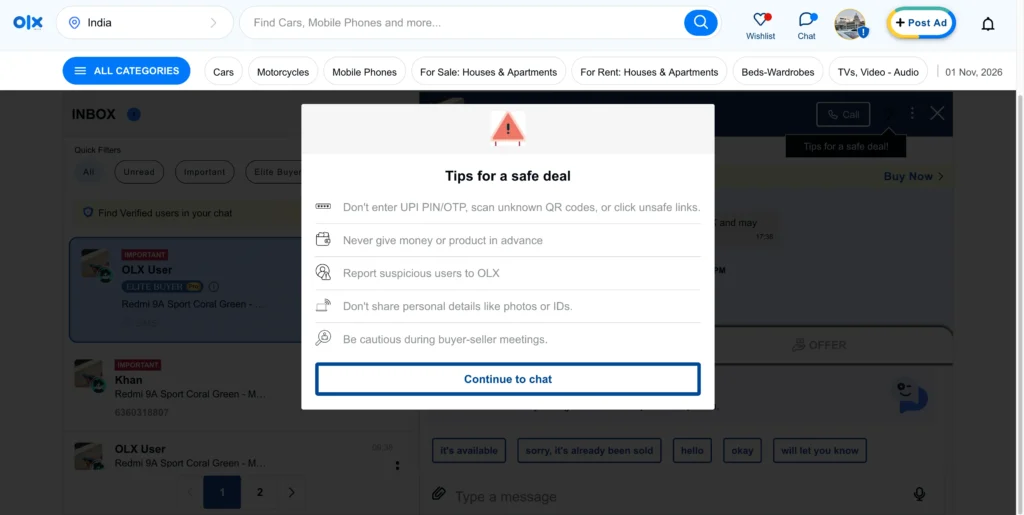
First, require every Elite Buyer Pro account to complete a mandatory video verification call and upload a real profile photo that locks permanently once approved. Preventing users from swapping photos or sending unverified proxies will stop identity fraud before contact begins.